
GCSE Maths (AQA)
435 videos | 33 hours
Please subscribe to watch this video.
This, and all other videos, are included in our premium subscriptions.
Premium accounts get access to all videos.
Enable autoplay to keep watching
Your browser is blocking videos from playing automatically. To turn it back on:
Safari (Mac): Click the Safari menu item in the top bar, then Settings → Websites → Auto-Play, then set Auto-Play to Allow All Auto-Play for the current website.
Safari (iPhone/iPad): open the Settings app, then Apps → Safari → Auto-Play, and select Allow All Auto-Play.
Number
Measures and Accuracy
Integer Limits of Accuracy
5:12
Limits of Accuracy
Spec
N16
- Limits of accuracy must have integer values in certain contexts
- Examples of contexts where limits of accuracy must be integers include number of people, number of objects, and outcomes of rolling
- In some cases, the upper bound of the limits of accuracy cannot be specified exactly, only that it must be less than a particular value
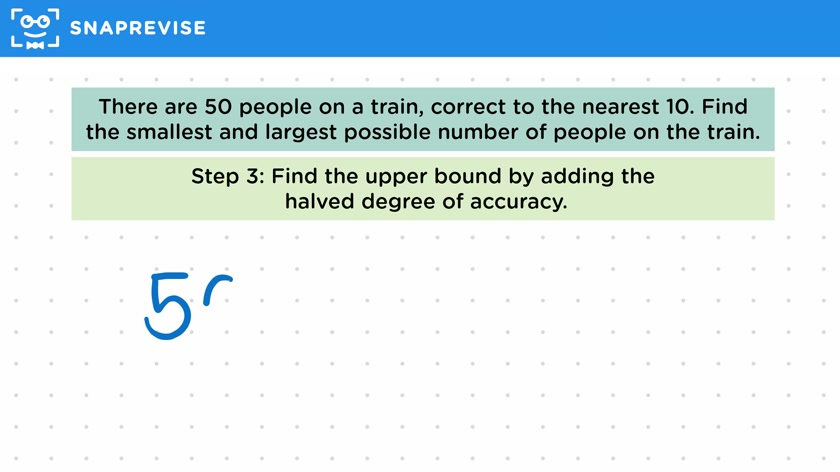
- To find the smallest possible number, subtract half of the degree of accuracy from the known value
- To find the largest possible number, add half of the degree of accuracy to the known value and round down to the nearest integer
- When the lower or upper limits are non-integers, round up the lower limit and round down the upper limit
Please subscribe to access these revision notes.
This, and all other video notes, are included in our premium subscriptions.
Premium accounts get access to all videos and revision notes.
Report an Issue
Spotted something wrong? Let us know and we'll take a look.