
GCSE Biology (AQA)
331 videos | 14 hours
Please subscribe to watch this video.
This, and all other videos, are included in our premium subscriptions.
Premium accounts get access to all videos.
Enable autoplay to keep watching
Your browser is blocking videos from playing automatically. To turn it back on:
Safari (Mac): Click the Safari menu item in the top bar, then Settings → Websites → Auto-Play, then set Auto-Play to Allow All Auto-Play for the current website.
Safari (iPhone/iPad): open the Settings app, then Apps → Safari → Auto-Play, and select Allow All Auto-Play.
Cell Biology
Transport in Cells
Defining Active Transport
2:13
Active Transport
Spec
4.1.3.3
- Active transport moves substances from a more dilute solution to a more concentrated solution.
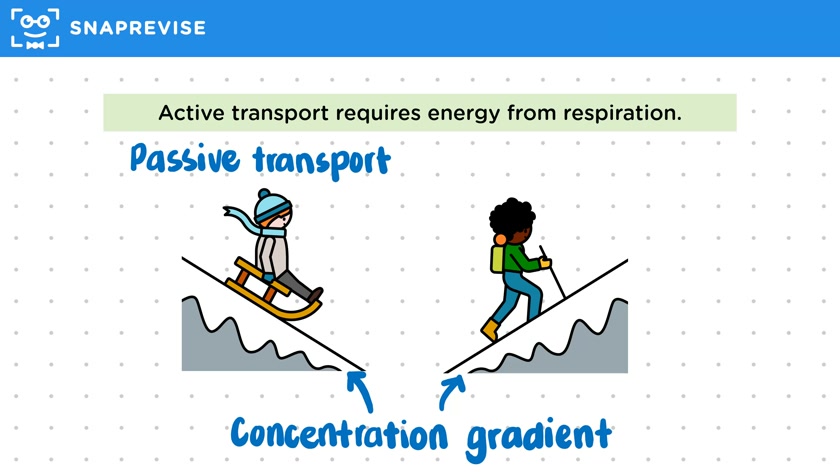
- This movement is against the concentration gradient.
- The process involves a cell membrane with an active transport pump.
- Active transport requires energy to move molecules against or up their concentration gradient.
- Differs from diffusion and osmosis, which follow the concentration gradient.
- Active transport is essential for understanding in exams, differing from passive transport methods like diffusion and osmosis.
- Energy required for active transport comes from respiration.
- Examples of passive transport include diffusion and osmosis, which do not require energy.
- Active transport is necessary when diffusion alone cannot meet a cell's needs.
- Substances like glucose and ions move into cells against the concentration gradient through active transport.
- Urea, a waste product, is removed from the blood into kidney cells via active transport, even against the concentration gradient.
- In exams, explaining the movement of substances by active transport involves understanding the movement against the concentration gradient.
Please subscribe to access these revision notes.
This, and all other video notes, are included in our premium subscriptions.
Premium accounts get access to all videos and revision notes.
Report an Issue
Spotted something wrong? Let us know and we'll take a look.