
GCSE Physics (AQA)
346 videos | 23 hours
Please subscribe to watch this video.
This, and all other videos, are included in our premium subscriptions.
Premium accounts get access to all videos.
Enable autoplay to keep watching
Your browser is blocking videos from playing automatically. To turn it back on:
Safari (Mac): Click the Safari menu item in the top bar, then Settings → Websites → Auto-Play, then set Auto-Play to Allow All Auto-Play for the current website.
Safari (iPhone/iPad): open the Settings app, then Apps → Safari → Auto-Play, and select Allow All Auto-Play.
Forces
Pressure and pressure differences in fluids
Pressure from a Fluid
4:48
Fluid Pressure
Spec
4.5.5.1.1
- Pressure is a force spread over an area.
- Forces typically act from a single point, while pressures explain forces spread out from multiple points.
- Standing on the ground exerts a weight force due to gravity, acting from every point of foot contact, creating pressure.
- Fluids exert pressure on their containers.
- Gases exert pressure due to collisions between gas particles and container walls.
- Gas particles move freely, frequently colliding with walls, creating outward pressure.
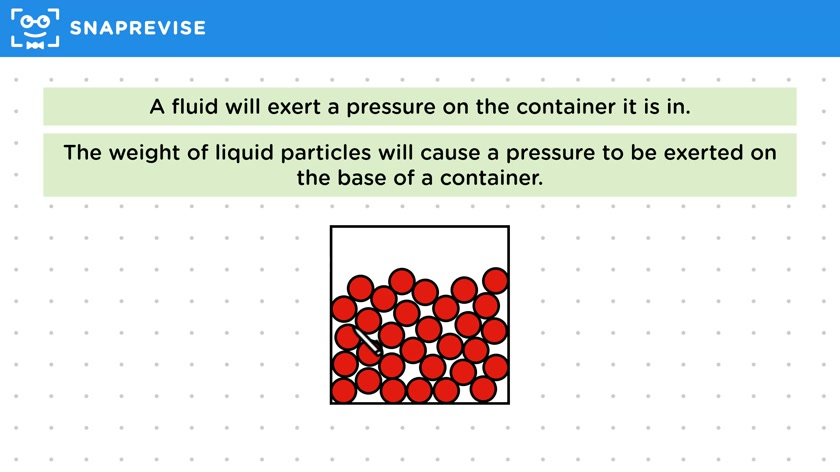
- Liquid particles exert pressure on the base of a container due to their weight.
- Liquid particles are joined but can move and flow, fitting a container.
- Liquid particles fall to the bottom, creating pressure on the base.
- Particles above increase pressure on the base by pushing down.
- Liquid pressure acts not only downwards but also sideways due to particle arrangement.
- Sideways forces push particles at the walls outward, causing outward pressure.
- Both gas and liquid pressures act at right angles to the walls.
- Fluids exert pressure on submerged objects, creating inward pressure.
- Gas particles colliding with objects create inward pressure.
- Liquid particles press against submerged objects, creating inward pressure.
Please subscribe to access these revision notes.
This, and all other video notes, are included in our premium subscriptions.
Premium accounts get access to all videos and revision notes.
Report an Issue
Spotted something wrong? Let us know and we'll take a look.