
GCSE Combined Science (AQA)
622 videos | 38 hours
Please subscribe to watch this video.
This, and all other videos, are included in our premium subscriptions.
Premium accounts get access to all videos.
Enable autoplay to keep watching
Your browser is blocking videos from playing automatically. To turn it back on:
Safari (Mac): Click the Safari menu item in the top bar, then Settings → Websites → Auto-Play, then set Auto-Play to Allow All Auto-Play for the current website.
Safari (iPhone/iPad): open the Settings app, then Apps → Safari → Auto-Play, and select Allow All Auto-Play.
Chemistry of the atmosphere
The composition and evolution of the Earth's atmosphere
The Early Atmosphere: Carbon Dioxide
6:40
Changes in Earth's Atmosphere Over Time
Spec
4.9.1.4
- Early atmosphere was mostly carbon dioxide.
- Scientists believe more than three quarters of the early atmosphere was carbon dioxide, with the remainder being methane, nitrogen, and ammonia.
- Over time, the amount of carbon dioxide decreased significantly.
- Present atmosphere contains only about 0.04% carbon dioxide, with nitrogen and oxygen being more prominent.
- Formation of sedimentary rocks removed carbon dioxide from the atmosphere.
- Oceans and lakes formed from water vapor, dissolving carbon dioxide to form carbonate compounds like calcium carbonate.
- Carbonates, being insoluble, settled as sediments or became part of sea creatures' skeletons and shells.
- Over millions of years, some sediment turned into limestone, a sedimentary rock mostly consisting of calcium carbonate.
- Algae and plants decreased carbon dioxide through photosynthesis, converting it to oxygen.
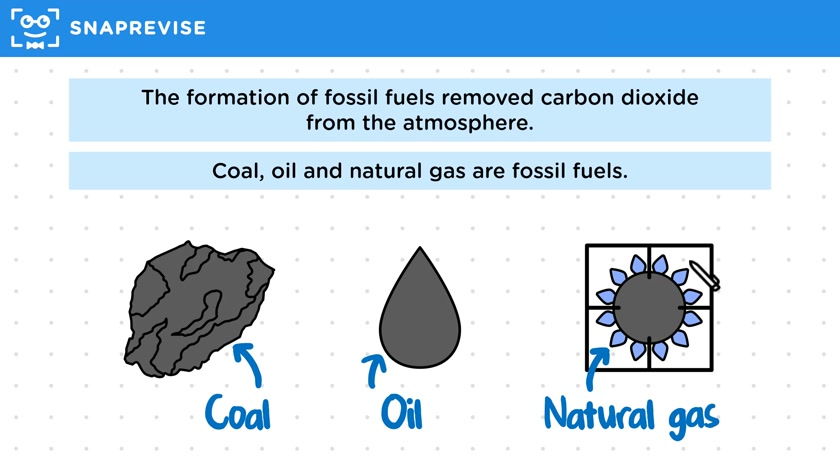
- Fossil fuels formation removed carbon dioxide from the atmosphere.
- Fossil fuels include coal, oil, and natural gas, which are major energy resources.
- Coal is a sedimentary rock that can be burnt for energy.
- Oil is refined into petrol or diesel for vehicles.
- Natural gas is used for heating and cooking.
- Coal formed from trees and plants in dense forests and wetlands, buried under sediment preventing oxidation.
- Over millions of years, compression and heating turned plant matter into coal.
- Crude oil and natural gas formed from oceanic plants and tiny animals buried under sediment.
- Heat and pressure converted remains into crude oil and natural gas over millions of years.
- Today, these resources are extracted by drilling into the ocean.
Please subscribe to access these revision notes.
This, and all other video notes, are included in our premium subscriptions.
Premium accounts get access to all videos and revision notes.
Report an Issue
Spotted something wrong? Let us know and we'll take a look.