
GCSE Combined Science (AQA)
622 videos | 38 hours
Please subscribe to watch this video.
This, and all other videos, are included in our premium subscriptions.
Premium accounts get access to all videos.
Enable autoplay to keep watching
Your browser is blocking videos from playing automatically. To turn it back on:
Safari (Mac): Click the Safari menu item in the top bar, then Settings → Websites → Auto-Play, then set Auto-Play to Allow All Auto-Play for the current website.
Safari (iPhone/iPad): open the Settings app, then Apps → Safari → Auto-Play, and select Allow All Auto-Play.
Chemical changes
Reactions of acids
pH Scale
5:45
Acid - Base Reactions and pH
Spec
4.4.2.4
- Acids produce hydrogen ions (H+) in aqueous solutions.
- Ionic substances dissolved in water form positive and negative ions.
- A solution with H+ ions, like HCL, is acidic regardless of the negative ion.
- Alkalis produce hydroxide ions (OH-) in solution.
- An ionic solution with OH- ions is alkaline, e.g., sodium hydroxide (Na+ and OH-).
- The pH scale measures acidity or alkalinity, ranging from 0 to 14.
- pH 0 indicates a strong acid with high hydrogen ion concentration.
- pH 14 indicates a strong alkali with high hydroxide ion concentration.
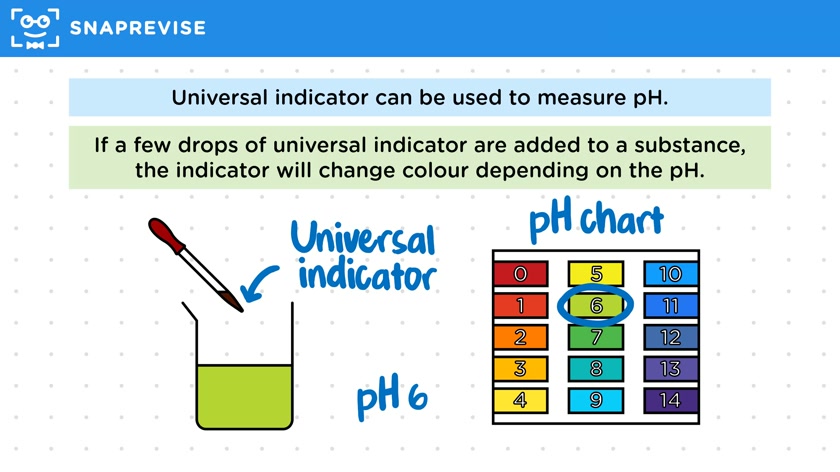
- Universal indicator changes color based on pH, used to measure pH.
- A pH color chart helps interpret the pH value from the indicator's color.
- Universal indicator can be subjective; other indicators work for specific pH ranges.
- pH probes provide accurate pH measurements without color interpretation.
- Neutral solutions have a pH of 7, e.g., pure water.
- Acidic solutions have pH values less than 7; stronger acids are further from 7.
- Common acidic substances include fruit juices (pH 2-4) and lab acids like hydrochloric acid.
- Alkaline solutions have pH values greater than 7; stronger alkalis are further from 7.
- Common alkaline substances include baking soda (pH 8-9) and oven cleaners (pH 11-13).
- Strongest alkalis, like sodium hydroxide, are found in labs.
- Understanding pH values and using indicators and probes is essential for exams.
Please subscribe to access these revision notes.
This, and all other video notes, are included in our premium subscriptions.
Premium accounts get access to all videos and revision notes.
Report an Issue
Spotted something wrong? Let us know and we'll take a look.