
GCSE Combined Science (AQA)
622 videos | 38 hours
Please subscribe to watch this video.
This, and all other videos, are included in our premium subscriptions.
Premium accounts get access to all videos.
Enable autoplay to keep watching
Your browser is blocking videos from playing automatically. To turn it back on:
Safari (Mac): Click the Safari menu item in the top bar, then Settings → Websites → Auto-Play, then set Auto-Play to Allow All Auto-Play for the current website.
Safari (iPhone/iPad): open the Settings app, then Apps → Safari → Auto-Play, and select Allow All Auto-Play.
Magnetism and electromagnetism
Permanent and induced magnetism, magnetic forces and fields
Magnetic Field Around the Earth
4:00
Introduction to Magnetic Fields
Spec
4.7.1.2
- The Earth has a magnetic field surrounding it.
- Magnetic field lines join at the Earth's magnetic poles: the south pole in the Antarctic and the north pole in the Arctic.
- The forces from the Earth's magnetic field are too weak to notice elsewhere.
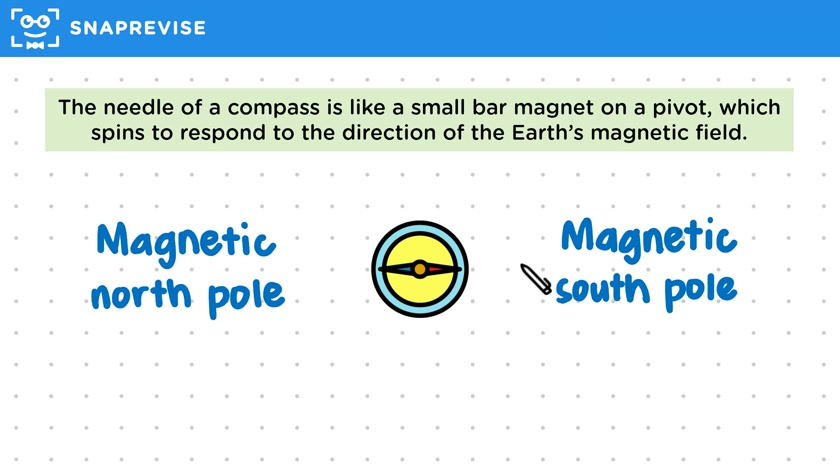
- A compass can demonstrate the existence of the Earth's magnetic field.
- The compass needle acts like a small bar magnet, responding to the Earth's magnetic field.
- The compass needle's south pole points to the Earth's magnetic north pole, and its north pole points to the Earth's magnetic south pole.
- Compasses provide evidence that the Earth's core is magnetic.
- A compass needle aligns itself along the north-south lines of the Earth's magnetic field.
- The Earth's magnetic field poles and geographic poles are swapped.
- The south pole of the compass needle points to the geographic South Pole, which is the magnetic north pole of the Earth.
- The north pole of the compass needle points to the geographic North Pole, which is the magnetic south pole of the Earth.
- In exams, you may need to explain the distinction between magnetic and geographic poles, but using geographic names is generally acceptable.
Please subscribe to access these revision notes.
This, and all other video notes, are included in our premium subscriptions.
Premium accounts get access to all videos and revision notes.
Report an Issue
Spotted something wrong? Let us know and we'll take a look.