
GCSE Combined Science (AQA)
622 videos | 38 hours
Please subscribe to watch this video.
This, and all other videos, are included in our premium subscriptions.
Premium accounts get access to all videos.
Enable autoplay to keep watching
Your browser is blocking videos from playing automatically. To turn it back on:
Safari (Mac): Click the Safari menu item in the top bar, then Settings → Websites → Auto-Play, then set Auto-Play to Allow All Auto-Play for the current website.
Safari (iPhone/iPad): open the Settings app, then Apps → Safari → Auto-Play, and select Allow All Auto-Play.
Bonding, structure, and the properties of matter
Structure and bonding of carbon
Fullerenes
1:59
Carbon Structures and Bonding
Spec
4.2.3.3
- Rine is a molecule made of carbon atoms forming a hollow shape.
- Spherical molecules are examples of rines with completely hollow structures.
- Rines are not giant covalent structures despite being large molecules.
- Rines are invisible to the human eye.
- Rines are often made up of hexagonal rings of carbon atoms.
- Carbon atoms in rines can be arranged in hexagons, pentagons, or heptagons.
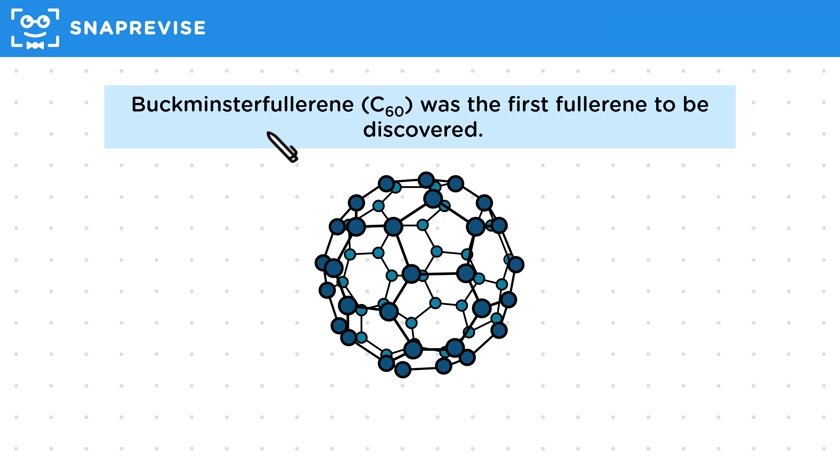
- Buckminster Fillin C60, also known as a Bucky Ball, was the first rine discovered.
- Bucky Balls have a spherical shape similar to a football with pentagons and hexagons.
- Rines have many uses, including carrying medical drugs into the body.
- The hollow structure of rines allows them to act as cages for transporting drugs.
- Carbon nanotubes are a type of rine with a long, cylindrical structure.
- Carbon nanotubes are frequently used in industry.
- More details on carbon nanotubes will be covered elsewhere in the course.
Please subscribe to access these revision notes.
This, and all other video notes, are included in our premium subscriptions.
Premium accounts get access to all videos and revision notes.
Report an Issue
Spotted something wrong? Let us know and we'll take a look.