
GCSE Combined Science (AQA)
622 videos | 38 hours
Please subscribe to watch this video.
This, and all other videos, are included in our premium subscriptions.
Premium accounts get access to all videos.
Enable autoplay to keep watching
Your browser is blocking videos from playing automatically. To turn it back on:
Safari (Mac): Click the Safari menu item in the top bar, then Settings → Websites → Auto-Play, then set Auto-Play to Allow All Auto-Play for the current website.
Safari (iPhone/iPad): open the Settings app, then Apps → Safari → Auto-Play, and select Allow All Auto-Play.
Ecology
Adaptations, Interdependence and Competition
Communities & Ecosystems
1:36
Communities
Spec
4.7.1.1
- Ecology requires defining terminology to describe different levels of ecosystem organization.
- Habitats, where organisms live within an ecosystem, include deserts, ponds, and woodlands.
- The term "habitat" should be familiar from key stage three education.
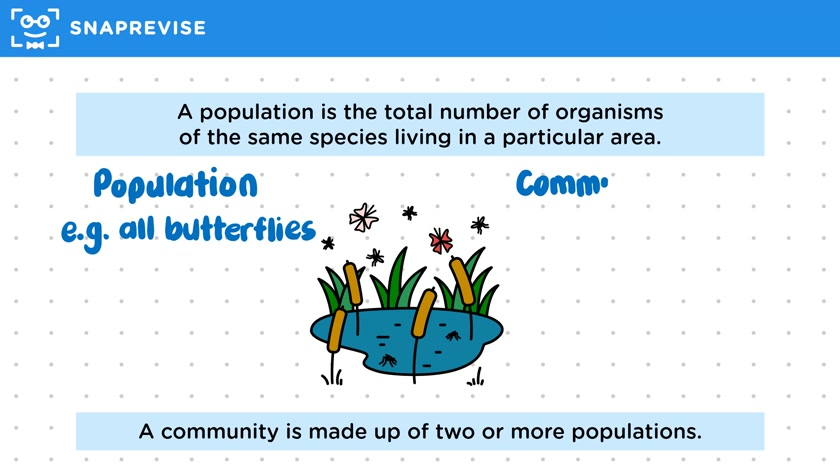
- A population consists of all organisms of the same species living in a specific area, such as a pond.
- A community is made up of two or more populations of different species within an ecosystem.
- An ecosystem involves the interaction between a community of living organisms (biotic) and the non-living (abiotic) parts of their environment.
- Ecosystem interactions include dependencies for food and the impact of environmental elements like weather on organisms.
- Examples of ecosystem interactions: bees need pollen and nectar from plants, which in turn rely on bees for pollination; birds eat mulberries and help in seed dispersal while also controlling mouse populations to protect plant life.
- Further details on biotic and abiotic factors are provided elsewhere.
Please subscribe to access these revision notes.
This, and all other video notes, are included in our premium subscriptions.
Premium accounts get access to all videos and revision notes.
Report an Issue
Spotted something wrong? Let us know and we'll take a look.