
GCSE Combined Science (AQA)
622 videos | 38 hours
Please subscribe to watch this video.
This, and all other videos, are included in our premium subscriptions.
Premium accounts get access to all videos.
Enable autoplay to keep watching
Your browser is blocking videos from playing automatically. To turn it back on:
Safari (Mac): Click the Safari menu item in the top bar, then Settings → Websites → Auto-Play, then set Auto-Play to Allow All Auto-Play for the current website.
Safari (iPhone/iPad): open the Settings app, then Apps → Safari → Auto-Play, and select Allow All Auto-Play.
Atomic structure and the periodic table
A simple model of the atom, symbols, relative atomic mass, electronic charge and isotopes
Atomic Nucleus and Shells
3:30
Atomic Structure
Spec
4.1.1.4
4.1.1.5
- Atoms are often depicted as circles or spheres.
- Simple diagrams use circles to represent atoms.
- Detailed diagrams reveal atoms are more complex.
- Atoms are mostly empty space, not solid spheres.
- Atoms have a tiny central region called the nucleus.
- The nucleus is always at the center of the atom.
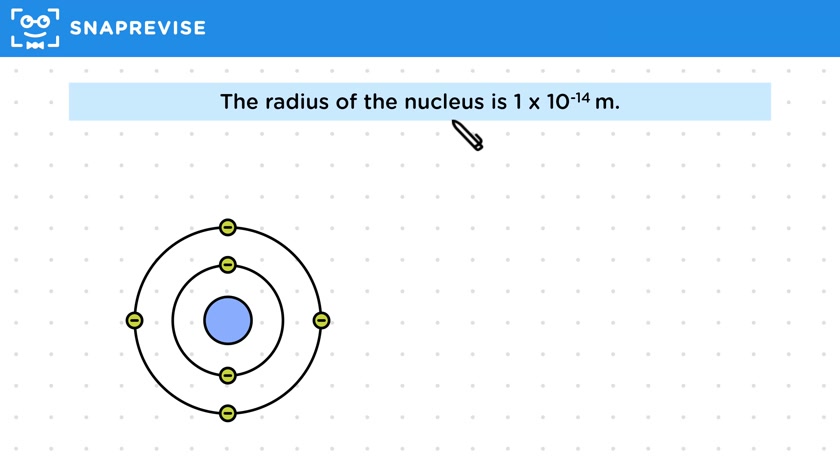
- Electrons surround the nucleus in shells.
- Atom diagrams resemble a solar system model.
- The outer shell is crucial for chemistry.
- Shells are three-dimensional but often drawn as 2D rings.
- The nucleus radius is approximately 1 x 10^-14 meters.
- The nucleus is extremely small compared to the atom.
- The nucleus contains almost all the atom's mass.
- The nucleus is very dense with mass concentrated in a small volume.
- Electrons have little mass compared to the nucleus.
- The atom is mostly empty space.
- The nucleus makes up almost all the atom's mass.
Please subscribe to access these revision notes.
This, and all other video notes, are included in our premium subscriptions.
Premium accounts get access to all videos and revision notes.
Report an Issue
Spotted something wrong? Let us know and we'll take a look.