
GCSE Chemistry (AQA)
196 videos | 19 hours
Please subscribe to watch this video.
This, and all other videos, are included in our premium subscriptions.
Premium accounts get access to all videos.
Enable autoplay to keep watching
Your browser is blocking videos from playing automatically. To turn it back on:
Safari (Mac): Click the Safari menu item in the top bar, then Settings → Websites → Auto-Play, then set Auto-Play to Allow All Auto-Play for the current website.
Safari (iPhone/iPad): open the Settings app, then Apps → Safari → Auto-Play, and select Allow All Auto-Play.
Energy changes
Chemical cells and fuel cells
Metal Reactivity & Cells
3:06
Chemical Reactions in Cells and Batteries
Spec
4.5.2.1
- Cells contain two electrodes made of different metals.
- Cells generate electric currents; metals must be different to produce current.
- Example: Magnesium and copper electrodes react with electrolyte to produce current.
- Different metal electrode combinations produce different voltages.
- Example: Magnesium and copper produce 2.7 volts; iron and tin produce 0.3 volts.
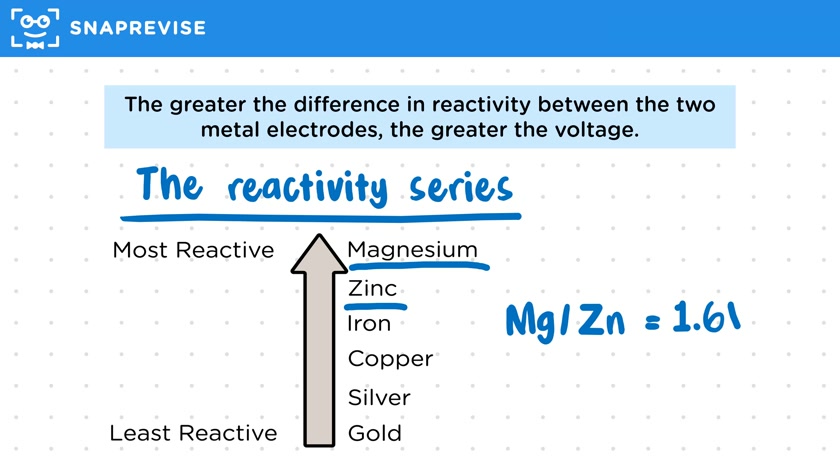
- Greater difference in reactivity between metal electrodes results in greater voltage.
- Reactivity series is an ordered list of metal reactivity, important for exams.
- Example: Magnesium and zinc electrodes produce 1.6 volts due to similar reactivity.
- Magnesium and silver electrodes produce 4 volts due to greater reactivity difference.
- Reactivity series can be used to compare cells with different electrodes in exams.
- Example problem: Replacing copper with iron in a cell decreases potential difference.
- Steps to solve: Identify electrode positions in reactivity series, determine reactivity difference, and state effect on potential difference.
- Smaller reactivity difference between magnesium and iron than magnesium and copper decreases voltage.
Please subscribe to access these revision notes.
This, and all other video notes, are included in our premium subscriptions.
Premium accounts get access to all videos and revision notes.
Report an Issue
Spotted something wrong? Let us know and we'll take a look.