
GCSE Physics (AQA)
346 videos | 23 hours
Please subscribe to watch this video.
This, and all other videos, are included in our premium subscriptions.
Premium accounts get access to all videos.
Enable autoplay to keep watching
Your browser is blocking videos from playing automatically. To turn it back on:
Safari (Mac): Click the Safari menu item in the top bar, then Settings → Websites → Auto-Play, then set Auto-Play to Allow All Auto-Play for the current website.
Safari (iPhone/iPad): open the Settings app, then Apps → Safari → Auto-Play, and select Allow All Auto-Play.
Electricity
Static electricity
Sparks
2:01
Static Electricity and Electric Fields
Spec
4.2.5.1
- A charged object discharges when near or in contact with an Earthed conductor.
- Example given: a Perspex rod charged by rubbing with a cloth discharges when in contact with a metal railing connected to the earth.
- The charge flows through the railing to the earth, causing the rod to lose its charge.
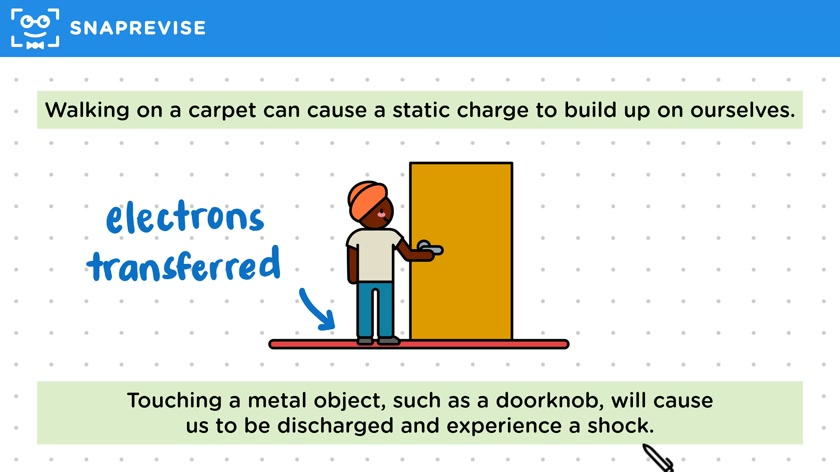
- Daily example: walking on a carpet can cause a static charge to build up.
- Discharge occurs when touching a metal object like a doorknob, resulting in an electric shock.
- Sparks can occur without direct contact; they are electric currents flowing through the air from a charged object to an Earthed conductor.
- Sparks form when a strongly charged object is near an Earthed conductor, requiring a high potential difference for sparking.
- Specific examples of sparking and discharging are not required for exams, but understanding the concept may be tested.
Please subscribe to access these revision notes.
This, and all other video notes, are included in our premium subscriptions.
Premium accounts get access to all videos and revision notes.
Report an Issue
Spotted something wrong? Let us know and we'll take a look.