
GCSE Physics (AQA)
346 videos | 23 hours
Please subscribe to watch this video.
This, and all other videos, are included in our premium subscriptions.
Premium accounts get access to all videos.
Enable autoplay to keep watching
Your browser is blocking videos from playing automatically. To turn it back on:
Safari (Mac): Click the Safari menu item in the top bar, then Settings → Websites → Auto-Play, then set Auto-Play to Allow All Auto-Play for the current website.
Safari (iPhone/iPad): open the Settings app, then Apps → Safari → Auto-Play, and select Allow All Auto-Play.
Electricity
Current, potential difference and resistance
Current Flow in a Wire
6:08
Circutis, Charge and Current
Spec
4.2.1.1
4.2.1.2
- Metals contain delocalized electrons that move around positive ions.
- The basic structure of metals like copper involves large positive ions in a rigid structure.
- Positive ions are atoms that have lost electrons, gaining a positive charge.
- Delocalized electrons are free to move and provide metals with a strong structure.
- Electric current is a flow of charge; delocalized electrons in a wire carry this current.
- Electrons, as charge carriers, move while ions remain stationary.
- Supplying energy can make electrons move in the same direction, causing a flow of negative charge.
- In metals, charge is carried by delocalized electrons.
- In a circuit, electrons carry charge from the negative to the positive terminal of a cell.
- Charge carriers move clockwise in a circuit due to attraction to the positive terminal and repulsion from the negative terminal.
- A closed loop is necessary to prevent electron buildup and ensure consistent electron flow.
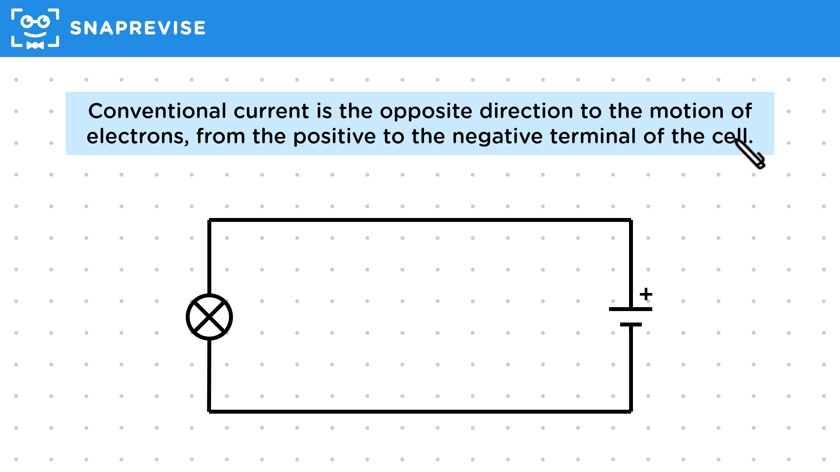
- Conventional current flows from positive to negative, opposite to electron motion.
- Scientists initially believed positive charges carried current, leading to the concept of conventional current.
- Current is the same at every point in a single closed loop circuit due to uniform electron concentration and speed.
- Ammeters measure current in a circuit and have a positive and negative connection.
- Ammeters should be connected in series with the component being measured.
- The circuit symbol for an ammeter is a circle with an "A" inside.
- Ammeters provide a negative reading if connected incorrectly.
- Ammeters should be placed on the same branch as the component to measure current through it.
Please subscribe to access these revision notes.
This, and all other video notes, are included in our premium subscriptions.
Premium accounts get access to all videos and revision notes.
Report an Issue
Spotted something wrong? Let us know and we'll take a look.