
GCSE Combined Science (AQA)
622 videos | 38 hours
Please subscribe to watch this video.
This, and all other videos, are included in our premium subscriptions.
Premium accounts get access to all videos.
Enable autoplay to keep watching
Your browser is blocking videos from playing automatically. To turn it back on:
Safari (Mac): Click the Safari menu item in the top bar, then Settings → Websites → Auto-Play, then set Auto-Play to Allow All Auto-Play for the current website.
Safari (iPhone/iPad): open the Settings app, then Apps → Safari → Auto-Play, and select Allow All Auto-Play.
Electricity
Current, potential difference and resistance
Potential Difference
4:00
Potential Difference and Resistance
Spec
4.2.1.1
4.2.1.2
4.2.1.3
- A current requires a power source, like a cell, to flow in a circuit.
- Chemical reactions in the cell release energy, allowing current to flow and power components like a lamp.
- Potential difference measures the work done by a power source to make current flow.
- Greater potential difference means more work on charge carriers and more energy.
- Potential difference is measured in volts (V).
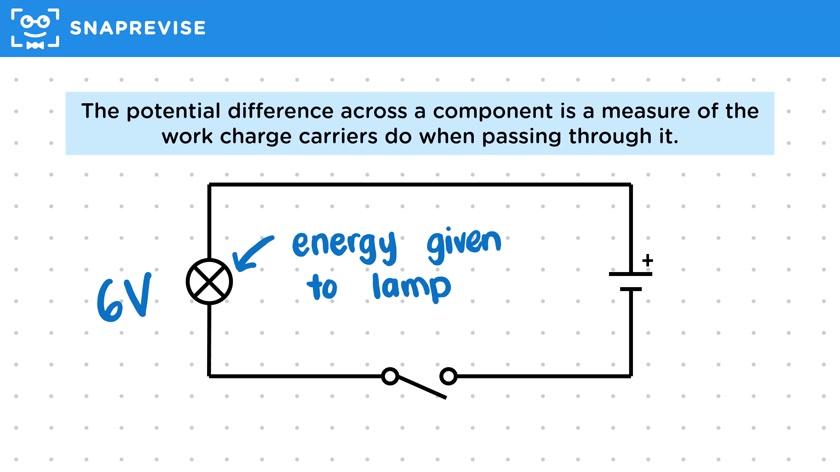
- Potential difference across a component measures the work done by charge carriers passing through it.
- Greater potential difference across a lamp means more work and energy given to it.
- Potential difference across a lamp can equal the cell's potential difference if all energy is transferred.
- The term "voltage" is commonly used but "potential difference" is preferred in exams and textbooks.
- Voltmeters measure potential difference across components.
- Voltmeters can have analog or digital displays.
- Voltmeters should be connected in parallel to the component being measured.
- Components are in parallel when on separate branches with no path passing through both.
- To measure potential difference across a lamp, connect the voltmeter in parallel to it.
- Voltmeter connection should create separate branches for the lamp and voltmeter.
Please subscribe to access these revision notes.
This, and all other video notes, are included in our premium subscriptions.
Premium accounts get access to all videos and revision notes.
Report an Issue
Spotted something wrong? Let us know and we'll take a look.