
GCSE Combined Science (AQA)
622 videos | 38 hours
Please subscribe to watch this video.
This, and all other videos, are included in our premium subscriptions.
Premium accounts get access to all videos.
Enable autoplay to keep watching
Your browser is blocking videos from playing automatically. To turn it back on:
Safari (Mac): Click the Safari menu item in the top bar, then Settings → Websites → Auto-Play, then set Auto-Play to Allow All Auto-Play for the current website.
Safari (iPhone/iPad): open the Settings app, then Apps → Safari → Auto-Play, and select Allow All Auto-Play.
Using resources
Using the Earth's resources and obtaining potable water
Phytomining and Bioleaching
10:05
Resource Use and Sustainable Extraction
Spec
4.10.1.4
4.10.2.2
- Earth's metal ore resources are limited and not being replaced.
- High-grade copper ores are becoming harder to find and mine.
- High-grade ores have a high percentage of copper, while low-grade ores have a low percentage.
- New methods using plants and bacteria can extract metals from low-grade copper ores.
- These methods avoid traditional mining, which is destructive and environmentally damaging.
- Traditional mining involves digging and moving large amounts of rock, causing noise, dust, and habitat destruction.
- Phyto mining uses plants to absorb metal compounds from soil, which are then harvested and burned to produce ash containing metal compounds.
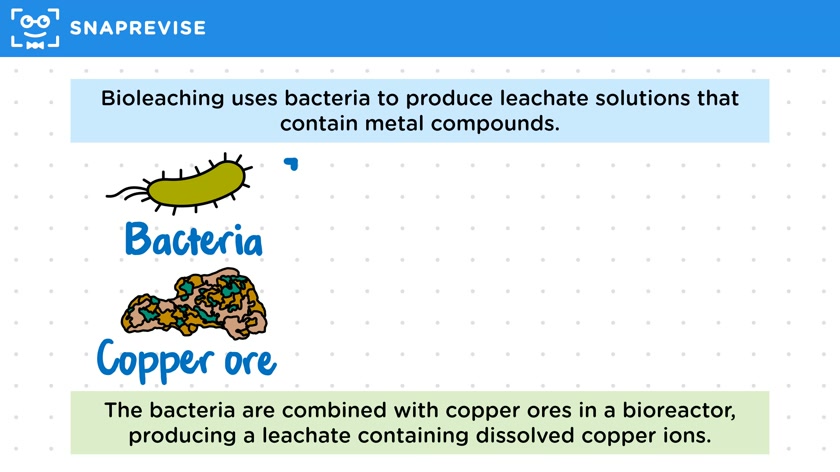
- Bio leaching uses bacteria to produce leachate solutions containing metal compounds.
- Copper can be extracted from leachate solutions using displacement reactions with scrap iron or through electrolysis.
- Traditional mining is the quickest method but causes environmental damage.
- Phyto mining and bio leaching reduce environmental damage and preserve high-grade ore supplies but are slower processes.
- Phyto mining requires land for plant growth, potentially clearing habitats.
- Bio leaching produces toxic byproducts like sulfuric acid.
- Many companies still prefer traditional mining due to the availability of high-grade ores.
Please subscribe to access these revision notes.
This, and all other video notes, are included in our premium subscriptions.
Premium accounts get access to all videos and revision notes.
Report an Issue
Spotted something wrong? Let us know and we'll take a look.