
GCSE Combined Science (AQA)
622 videos | 38 hours
Please subscribe to watch this video.
This, and all other videos, are included in our premium subscriptions.
Premium accounts get access to all videos.
Enable autoplay to keep watching
Your browser is blocking videos from playing automatically. To turn it back on:
Safari (Mac): Click the Safari menu item in the top bar, then Settings → Websites → Auto-Play, then set Auto-Play to Allow All Auto-Play for the current website.
Safari (iPhone/iPad): open the Settings app, then Apps → Safari → Auto-Play, and select Allow All Auto-Play.
Organisation
Animal Tissues, Organs and Organ Systems
Lock & Key Theory
1:50
Digestion
Spec
4.2.2.1
- The Lock and Key theory explains enzyme specificity, comparing enzymes to locks and substrates to keys.
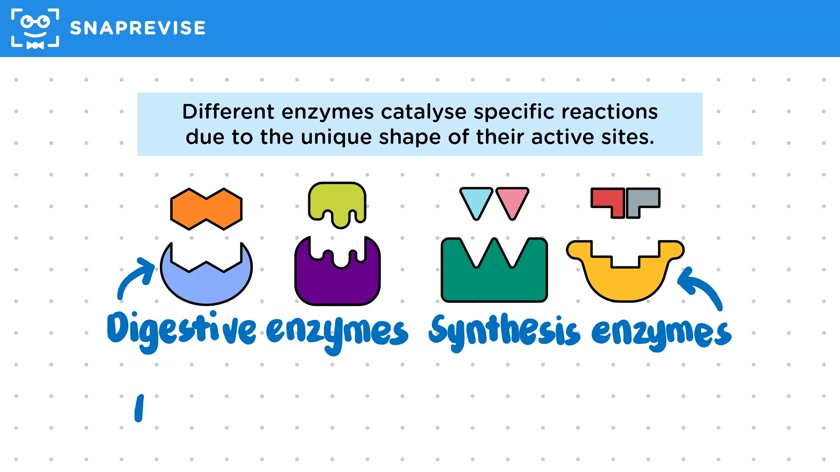
- Enzymes are specific to their substrates due to the unique shape of their active sites.
- Different enzymes catalyze specific reactions; digestive enzymes break down substrates, while synthesis enzymes join molecules.
- The active site of an enzyme is complementary to the shape of its substrate, allowing the substrate to fit neatly.
- If the active site is not complementary to the substrate, the substrate will not bind, preventing the enzyme from facilitating the reaction.
- Models demonstrating this concept are useful for explaining enzyme action in exams.
Please subscribe to access these revision notes.
This, and all other video notes, are included in our premium subscriptions.
Premium accounts get access to all videos and revision notes.
Report an Issue
Spotted something wrong? Let us know and we'll take a look.