
GCSE Combined Science (AQA)
622 videos | 38 hours
Please subscribe to watch this video.
This, and all other videos, are included in our premium subscriptions.
Premium accounts get access to all videos.
Enable autoplay to keep watching
Your browser is blocking videos from playing automatically. To turn it back on:
Safari (Mac): Click the Safari menu item in the top bar, then Settings → Websites → Auto-Play, then set Auto-Play to Allow All Auto-Play for the current website.
Safari (iPhone/iPad): open the Settings app, then Apps → Safari → Auto-Play, and select Allow All Auto-Play.
Inheritance, Variation and Evolution
Reproduction
Genetic Inheritance
2:08
Genetic Inheritance Terms
Spec
4.6.1.6
- Inheritance is the process by which genetic information is passed from parent to child.
- Diagrams typically show parents at the top and children below.
- Gametes (sperm and egg cells) contain chromosomes from each parent, leading to inherited characteristics.
- Genetic inheritance controls characteristics of all living things.
- Some characteristics are controlled by a single gene, such as fur color in mice or red-green colorblindness.
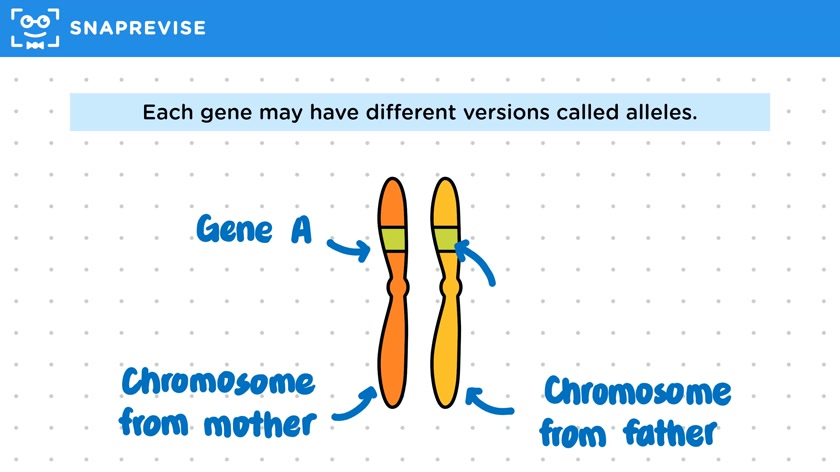
- Genes have different versions called alleles.
- Each individual inherits two versions of each chromosome, one from each parent, resulting in two copies of each gene.
- An individual receives one allele from the mother and one from the father.
- Characteristics can be controlled by a single set of genes or a pair of alleles.
- Important terms to define for exams include gamete, chromosome, gene, and allele.
- Most characteristics result from multiple genes interacting.
- Examples of traits influenced by multiple genes include hair color and skin color, which involve many genes working together to produce a range of appearances.
- Specific examples of characteristics controlled by more than one pair of alleles are not required knowledge for the exam.
Please subscribe to access these revision notes.
This, and all other video notes, are included in our premium subscriptions.
Premium accounts get access to all videos and revision notes.
Report an Issue
Spotted something wrong? Let us know and we'll take a look.