
GCSE Combined Science (AQA)
622 videos | 38 hours
Please subscribe to watch this video.
This, and all other videos, are included in our premium subscriptions.
Premium accounts get access to all videos.
Enable autoplay to keep watching
Your browser is blocking videos from playing automatically. To turn it back on:
Safari (Mac): Click the Safari menu item in the top bar, then Settings → Websites → Auto-Play, then set Auto-Play to Allow All Auto-Play for the current website.
Safari (iPhone/iPad): open the Settings app, then Apps → Safari → Auto-Play, and select Allow All Auto-Play.
Organic chemistry
Carbon compounds as fuels and feedstock
Combustion of Alkanes
8:48
Hydrocarbons
Spec
4.7.1.3
- Combustion of hydrocarbon fuels releases energy.
- Combustion is the reaction between a fuel and oxygen, also known as burning.
- Combustion reactions are used in bunsen burners for heating due to the large amount of energy released.
- Complete combustion of hydrocarbons produces carbon dioxide and water.
- Complete combustion requires plenty of oxygen for the hydrocarbon to react with.
- Example reaction: CH4 + 2O2 ��� CO2 + 2H2O.
- Methane consists of a carbon atom bonded to four hydrogens.
- Different hydrocarbons require different amounts of oxygen for complete combustion, producing varying amounts of carbon dioxide and water.
- During combustion, carbon and hydrogen in fuels are oxidized, meaning they gain oxygen.
- In complete combustion, carbon forms carbon dioxide, and hydrogen forms water.
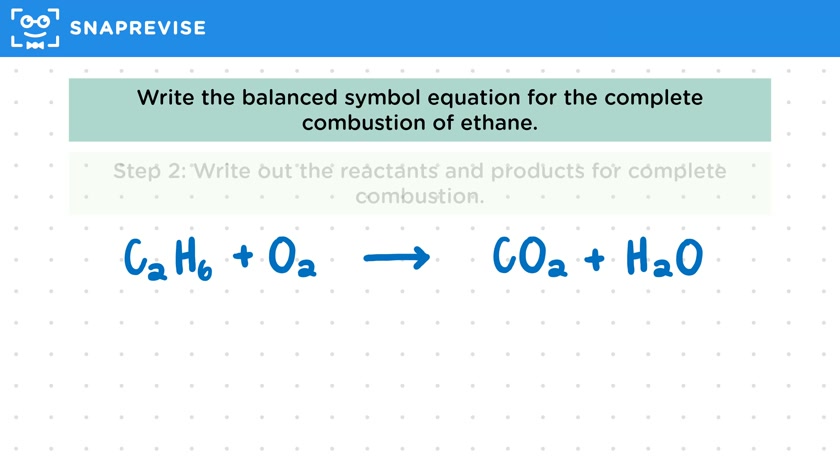
- Example problem: Write the balanced equation for the complete combustion of ethane.
- Ethane formula: C2H6.
- Organic compound prefixes indicate the number of carbon atoms (e.g., "eth" for two carbons).
- Alkanes have the general formula CN H2N+2.
- Complete combustion of ethane: C2H6 + O2 ��� CO2 + H2O.
- Balancing equations involves ensuring the same number of each type of atom on both sides.
- Balancing may require trial and error, starting with elements that appear in fewer places.
- Final balanced equation for ethane combustion: 2C2H6 + 7O2 ��� 4CO2 + 6H2O.
Please subscribe to access these revision notes.
This, and all other video notes, are included in our premium subscriptions.
Premium accounts get access to all videos and revision notes.
Report an Issue
Spotted something wrong? Let us know and we'll take a look.