
GCSE Combined Science (AQA)
622 videos | 38 hours
Please subscribe to watch this video.
This, and all other videos, are included in our premium subscriptions.
Premium accounts get access to all videos.
Enable autoplay to keep watching
Your browser is blocking videos from playing automatically. To turn it back on:
Safari (Mac): Click the Safari menu item in the top bar, then Settings → Websites → Auto-Play, then set Auto-Play to Allow All Auto-Play for the current website.
Safari (iPhone/iPad): open the Settings app, then Apps → Safari → Auto-Play, and select Allow All Auto-Play.
Infection and Response
Communicable Diseases
Antibiotics & Painkillers
2:43
Fighting Communicable Diseases
Spec
4.3.1.8
- Antibiotics are medicines that cure bacterial diseases by killing bacteria inside the body.
- Different antibiotics work in various ways, such as weakening bacterial cell walls or disrupting bacterial reproduction.
- The first antibiotic discovered was penicillin.
- Specific antibiotics are required to treat specific bacteria; not all antibiotics work on all bacteria.
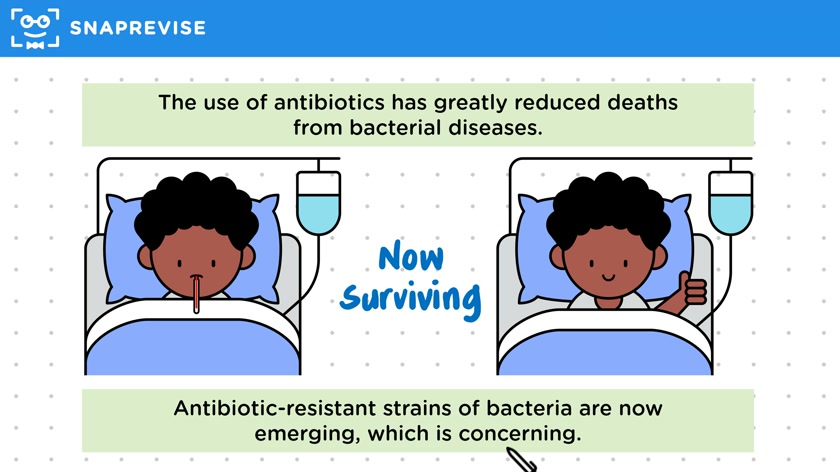
- Antibiotics have significantly reduced deaths from bacterial diseases, allowing many people to recover fully.
- Antibiotic-resistant strains of bacteria are emerging, posing a new challenge.
- Antibiotics do not kill viruses and have no effect on viral infections like the common cold.
- Other medicines, like painkillers, may treat symptoms of diseases but do not kill pathogens.
- Painkillers treat symptoms such as pain, inflammation, and fever, making patients more comfortable but not affecting the underlying pathogen.
- It's important to distinguish between antibiotics, which kill bacteria, and painkillers, which only alleviate symptoms, especially for exam purposes.
Please subscribe to access these revision notes.
This, and all other video notes, are included in our premium subscriptions.
Premium accounts get access to all videos and revision notes.
Report an Issue
Spotted something wrong? Let us know and we'll take a look.