
GCSE Chemistry (AQA)
196 videos | 19 hours
Please subscribe to watch this video.
This, and all other videos, are included in our premium subscriptions.
Premium accounts get access to all videos.
Enable autoplay to keep watching
Your browser is blocking videos from playing automatically. To turn it back on:
Safari (Mac): Click the Safari menu item in the top bar, then Settings → Websites → Auto-Play, then set Auto-Play to Allow All Auto-Play for the current website.
Safari (iPhone/iPad): open the Settings app, then Apps → Safari → Auto-Play, and select Allow All Auto-Play.
Atomic structure and the periodic table
A simple model of the atom, symbols, relative atomic mass, electronic charge and isotopes
Solvent, Solute & Solution
2:24
Mixtures
Spec
4.1.1.2
- When a solid is added to a liquid, it may appear to disappear.
- Example: Table salt dissolving in water forms a mixture.
- Dissolving is not a chemical reaction; no new substances are formed.
- The mixture still contains the original substances (salt and water).
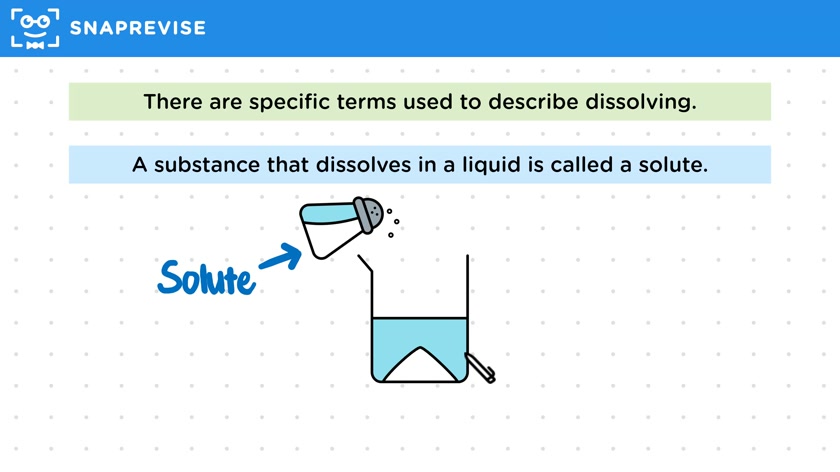
- Terms related to dissolving:
- Solute: The substance that dissolves (e.g., salt).
- Solvent: The liquid in which the solute dissolves (e.g., water).
- Solution: The mixture of solute and solvent (e.g., saltwater solution).
- Not all solids dissolve in a given solvent.
- Soluble: A substance that dissolves (e.g., salt is soluble in water).
- Insoluble: A substance that does not dissolve (e.g., sand is insoluble in water).
Please subscribe to access these revision notes.
This, and all other video notes, are included in our premium subscriptions.
Premium accounts get access to all videos and revision notes.
Report an Issue
Spotted something wrong? Let us know and we'll take a look.