
GCSE Chemistry (AQA)
196 videos | 19 hours
Please subscribe to watch this video.
This, and all other videos, are included in our premium subscriptions.
Premium accounts get access to all videos.
Enable autoplay to keep watching
Your browser is blocking videos from playing automatically. To turn it back on:
Safari (Mac): Click the Safari menu item in the top bar, then Settings → Websites → Auto-Play, then set Auto-Play to Allow All Auto-Play for the current website.
Safari (iPhone/iPad): open the Settings app, then Apps → Safari → Auto-Play, and select Allow All Auto-Play.
Quantitative chemistry
Use of amount of substance in relation to masses of pure substances
Mole Calculations
11:43
Moles, Mass, and Balanced Equations
Spec
4.3.2.1
- The number of moles in a substance can be calculated using its mass in grams and relative formula mass.
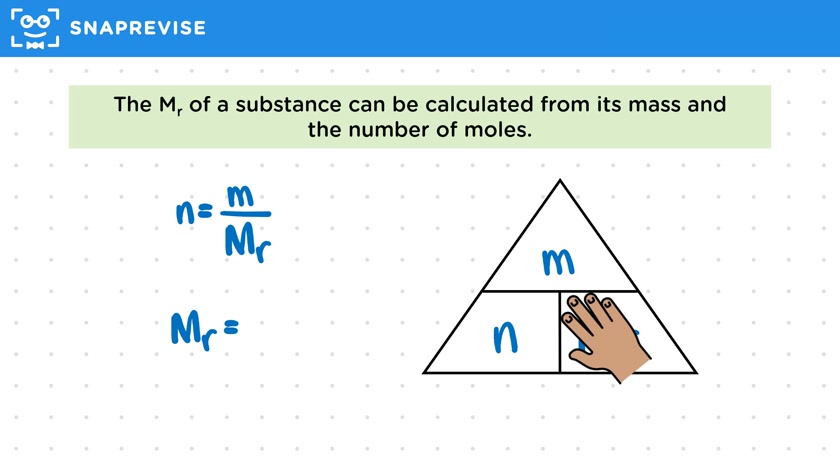
- The formula is: Moles (N) = Mass (M) / Relative Formula Mass (MR).
- For exams, you need to use and rearrange this formula.
- A formula triangle can help: N (moles) at the bottom left, M (mass) on top, MR (relative formula mass) at the bottom right.
- Mass should always be in grams for consistency.
- Example: Calculate moles in 80 grams of water using MR of 18, resulting in 4.44 moles.
- Example: Calculate moles in 0.5 kg of NH3 by converting mass to grams and using MR of 17, resulting in 29.4 moles.
- MR can be calculated from mass and moles, useful for identifying unknown compounds.
- Rearrange the formula to MR = M / N.
- Example: Calculate MR of a compound with 0.82 grams and 0.01 moles, resulting in 82 grams per mole.
- Mass can be calculated from MR and moles using the rearranged formula M = N * MR.
- Example: Calculate mass of 6 moles of nitrogen with MR of 28, resulting in 168 grams.
- Example: Calculate mass of 3 moles of PH3 with MR of 34, resulting in 102 grams.
- Be comfortable with rearranging the formula to calculate moles, mass, or relative formula mass.
Please subscribe to access these revision notes.
This, and all other video notes, are included in our premium subscriptions.
Premium accounts get access to all videos and revision notes.
Report an Issue
Spotted something wrong? Let us know and we'll take a look.