
GCSE Chemistry (AQA)
196 videos | 19 hours
Please subscribe to watch this video.
This, and all other videos, are included in our premium subscriptions.
Premium accounts get access to all videos.
Enable autoplay to keep watching
Your browser is blocking videos from playing automatically. To turn it back on:
Safari (Mac): Click the Safari menu item in the top bar, then Settings → Websites → Auto-Play, then set Auto-Play to Allow All Auto-Play for the current website.
Safari (iPhone/iPad): open the Settings app, then Apps → Safari → Auto-Play, and select Allow All Auto-Play.
Bonding, structure, and the properties of matter
Chemical bonds, ionic, covalent and metallic
Ionic Bonding
5:27
Different types of Chemical Bonds
Spec
4.2.1.1
4.2.1.2
- Ionic bonding occurs in compounds formed from metals combined with nonmetals.
- Example: Table salt (NaCl) is an ionic compound.
- Sodium (Na) is the metal, and chlorine (Cl) is the nonmetal in NaCl.
- Metals are on the left side of the periodic table; non-metals are on the right.
- During exams, periodic tables are not color-coded; students must know the positions of metals and non-metals.
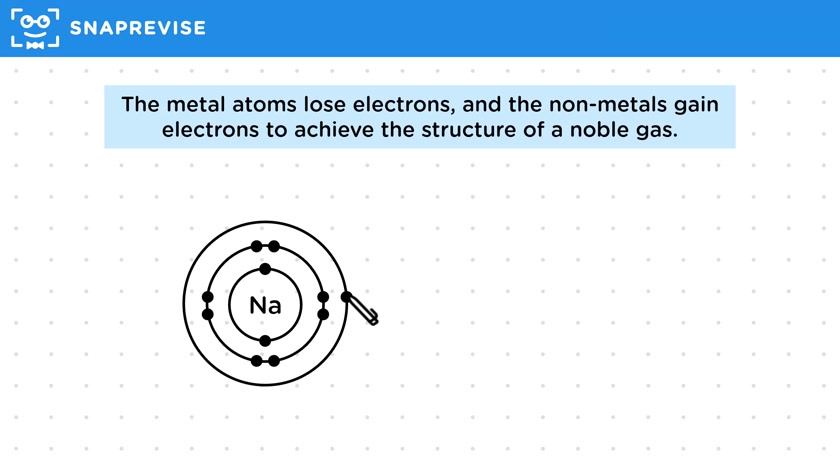
- Ionic compounds form when electrons from the outer shell of metal atoms are transferred to non-metal atoms.
- Sodium loses an electron to become a positively charged ion (Na+).
- Chlorine gains an electron to become a negatively charged ion (Cl-).
- Ionic bond: strong electrostatic force of attraction between oppositely charged ions.
- Metal atoms lose electrons to achieve the structure of a noble gas.
- Sodium loses an electron to have the same electronic structure as neon (Ne).
- Chlorine gains an electron to have the same electronic structure as argon (Ar).
- The number of electrons lost or gained depends on the number of electrons in the outer shell of the atom.
- Group numbers in the periodic table indicate the number of electrons in the outer shell.
- Metals in group 1 lose one electron to form a 1+ charge.
- Metals in group 2 lose two electrons to form a 2+ charge.
- Non-metals in group 6 gain two electrons to form a 2- charge.
- Non-metals in group 7 gain one electron to form a 1- charge.
Please subscribe to access these revision notes.
This, and all other video notes, are included in our premium subscriptions.
Premium accounts get access to all videos and revision notes.
Report an Issue
Spotted something wrong? Let us know and we'll take a look.