
GCSE Chemistry (AQA)
196 videos | 19 hours
Please subscribe to watch this video.
This, and all other videos, are included in our premium subscriptions.
Premium accounts get access to all videos.
Enable autoplay to keep watching
Your browser is blocking videos from playing automatically. To turn it back on:
Safari (Mac): Click the Safari menu item in the top bar, then Settings → Websites → Auto-Play, then set Auto-Play to Allow All Auto-Play for the current website.
Safari (iPhone/iPad): open the Settings app, then Apps → Safari → Auto-Play, and select Allow All Auto-Play.
Energy changes
Chemical cells and fuel cells
Cells & Batteries
3:18
Chemical Reactions in Cells and Batteries
Spec
4.5.2.1
- Chemical cells contain chemicals that react to produce electricity.
- A simple cell consists of two different metals in contact with an electrolyte.
- Electrolytes conduct an electric current when molten or in solution.
- Metals in cells are known as electrodes.
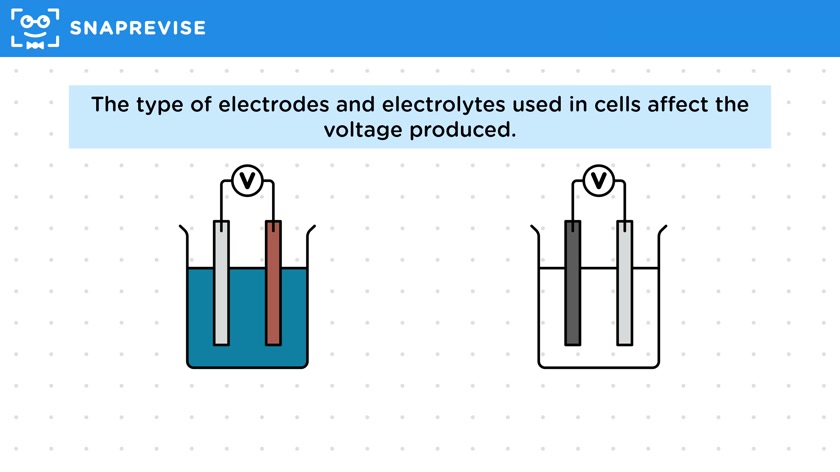
- The type of electrodes and electrolytes affects the voltage produced.
- Voltage refers to the potential difference between two points, leading to the flow of charged electrons (electric current).
- Different metals and electrolytes result in different potential differences.
- Example: Magnesium and copper electrodes in copper sulfate solution produce 2.7 volts.
- Example: Iron and tin in ammonium chloride solution produce 0.3 volts.
- Batteries are two or more cells connected in series.
- Scientific definition of a battery: consists of two or more cells in series.
- Batteries provide greater voltage than individual cells.
- Total voltage of cells in series is the sum of their individual voltages.
- Example: Two cells each producing 2.5 volts in series result in a total voltage of 5 volts.
Please subscribe to access these revision notes.
This, and all other video notes, are included in our premium subscriptions.
Premium accounts get access to all videos and revision notes.
Report an Issue
Spotted something wrong? Let us know and we'll take a look.