
GCSE Biology (AQA)
331 videos | 14 hours
Please subscribe to watch this video.
This, and all other videos, are included in our premium subscriptions.
Premium accounts get access to all videos.
Enable autoplay to keep watching
Your browser is blocking videos from playing automatically. To turn it back on:
Safari (Mac): Click the Safari menu item in the top bar, then Settings → Websites → Auto-Play, then set Auto-Play to Allow All Auto-Play for the current website.
Safari (iPhone/iPad): open the Settings app, then Apps → Safari → Auto-Play, and select Allow All Auto-Play.
Infection and Response
Communicable Diseases
How Diseases Spread
3:47
Pathogens and Infectious Diseases
Spec
4.3.1.1
- Pathogens that cause diseases can be spread by air, direct contact, or contaminated food or water.
- A pathogen is an organism that causes disease.
- Pathogens can enter plants or animals through air, direct contact, or contaminated food or water.
- For exams, it's important to state the ways in which pathogens can be spread.
- Pathogens spread through the air via droplet infection when an infectious person coughs, sneezes, or breathes out.
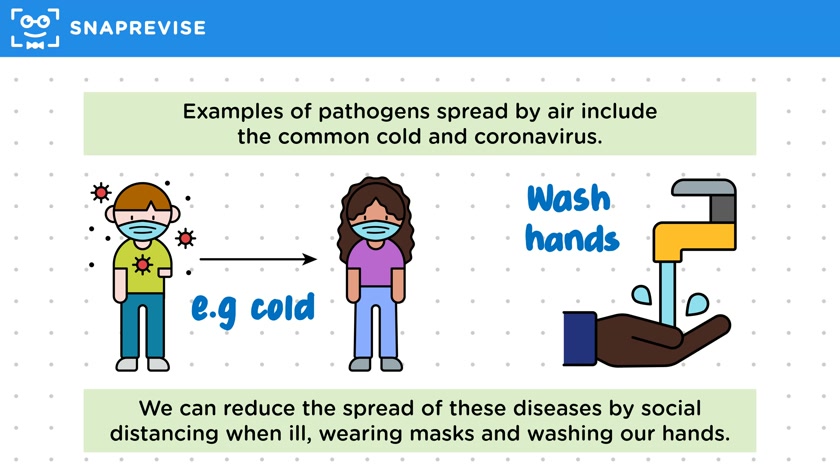
- Common cold and coronavirus are examples of pathogens spread by air.
- Measures to reduce the spread of airborne diseases include social distancing, wearing masks, and washing hands.
- Direct contact transmission includes skin-to-skin contact, sexual contact, or through blood via cuts or needle punctures.
- Animals can act as vectors, e.g., mosquitoes carrying malaria.
- Pathogens can also be spread through contaminated food causing illnesses like diarrhea and vomiting.
- Food safety measures include thoroughly washing fruits and vegetables and cooking meat thoroughly.
- Contaminated water can spread diseases like cholera; prevention includes access to sewage systems and clean water.
- For exams, describe how pathogens are spread by air, direct contact, contaminated food, and water, and how to prevent these.
Please subscribe to access these revision notes.
This, and all other video notes, are included in our premium subscriptions.
Premium accounts get access to all videos and revision notes.
Report an Issue
Spotted something wrong? Let us know and we'll take a look.