
GCSE Biology (AQA)
331 videos | 14 hours
Please subscribe to watch this video.
This, and all other videos, are included in our premium subscriptions.
Premium accounts get access to all videos.
Enable autoplay to keep watching
Your browser is blocking videos from playing automatically. To turn it back on:
Safari (Mac): Click the Safari menu item in the top bar, then Settings → Websites → Auto-Play, then set Auto-Play to Allow All Auto-Play for the current website.
Safari (iPhone/iPad): open the Settings app, then Apps → Safari → Auto-Play, and select Allow All Auto-Play.
Infection and Response
Communicable Diseases
Gonorrhoea
2:10
Diseases Caused by Bacteria, Fungi and Protists
Spec
4.3.1.3
- Gonorrhea is a sexually transmitted disease (STD) caused by a bacterium.
- The bacterium's appearance is shown in a diagram.
- Symptoms include a thick, yellow or green discharge from the vagina or penis, and pain during urination.
- Some people may not exhibit any symptoms.
- Untreated gonorrhea can lead to infertility.
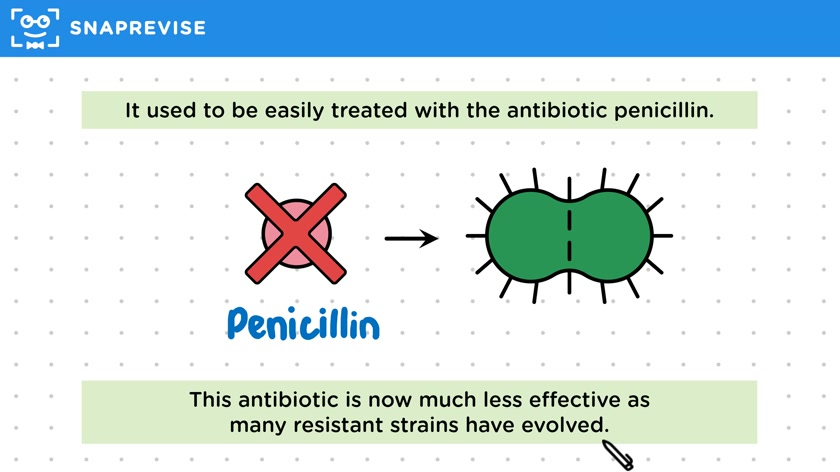
- Gonorrhea was historically treated with penicillin, which killed the bacterium.
- Penicillin is now less effective due to the evolution of resistant strains of the bacterium.
- Gonorrhea spreads through sexual contact.
- Barrier methods of contraception, such as condoms, can help control its spread.
- Current treatment includes the use of newer antibiotics.
- Both infected individuals and their sexual partners should be treated with antibiotics to limit the spread.
- For educational purposes, it's important to describe gonorrhea's transmission, symptoms, and prevention methods.
Please subscribe to access these revision notes.
This, and all other video notes, are included in our premium subscriptions.
Premium accounts get access to all videos and revision notes.
Report an Issue
Spotted something wrong? Let us know and we'll take a look.