
GCSE History (AQA)
Topic Summaries
Renaissance medicine
Features of Renaissance Britain
- The Renaissance (c.1500–c.1700) was a period of “rebirth” in Europe, where people started to question old ideas and focus more on observation and experimentation. This was a time of huge change in arts and sciences. In medicine, people started to question medieval ideas of Galen and Hippocrates and make new discoveries.
- Renaissance thinking increasingly emphasised observation, experimentation and scientific investigation.
- Consequences of the Renaissance included:
- New inventions: technology such as gunpowder meant a new type of wound for soldiers. Doctors had to find new ways to deal with illness and injury.
- New lands: sailors used more accurate mapping techniques, bringing back new medicines from their travels.
- New art: more realist drawings and techniques emerged, enabling artists like Michelangelo to study the body in more detail, improving anatomical knowledge.
- New ideas: the printing press allowed ideas to spread quickly across Europe. In addition, updated scientific methods including observation, hypotheses, and experimentation led to the questioning of old beliefs.
- Urban overcrowding increased, particularly among the poor, leading to the rapid spread of disease.
- Diet varied greatly by wealth; the poor continued to rely on bread and cheap food, while the rich had more varied diets.
- Clean water supplies remained limited, with rivers and wells often contaminated by waste. Waste disposal improved slowly, but many towns still relied on open drains, cesspits, and dumping waste into streets.
- Cheap gin led to widespread alcoholism, particularly among the urban poor. This was known as the Gin Craze (1720–1751). The government passed several Gin Acts to restrict the sale and production of gin, aiming to reduce crime and disorder.
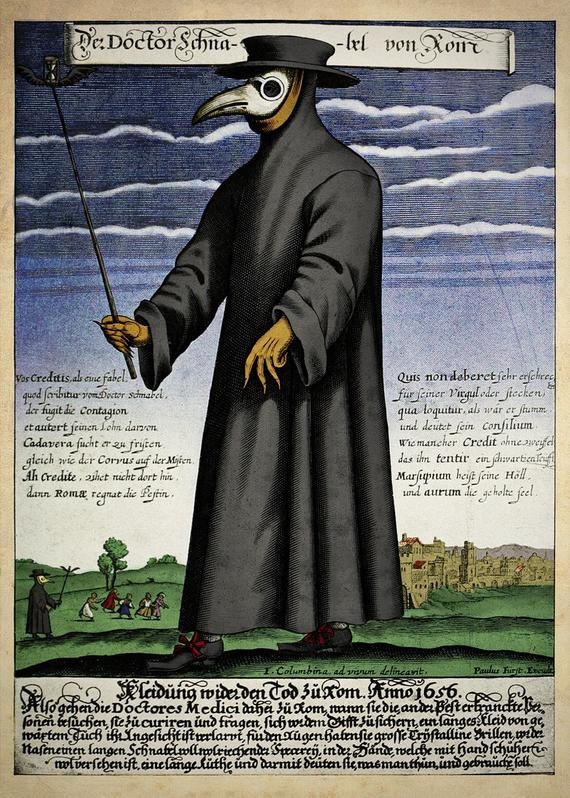
A 17th century colourised engraving of a plague doctor
Unlock Features of Renaissance Britain
Sign up to unlock the rest of this topic — plus every other topic, video, flashcard set and eBook guide in your SnapRevise+ subscription.
Cancel anytime — instant access the moment you sign up.
Report an Issue
Spotted something wrong? Let us know and we'll take a look.